
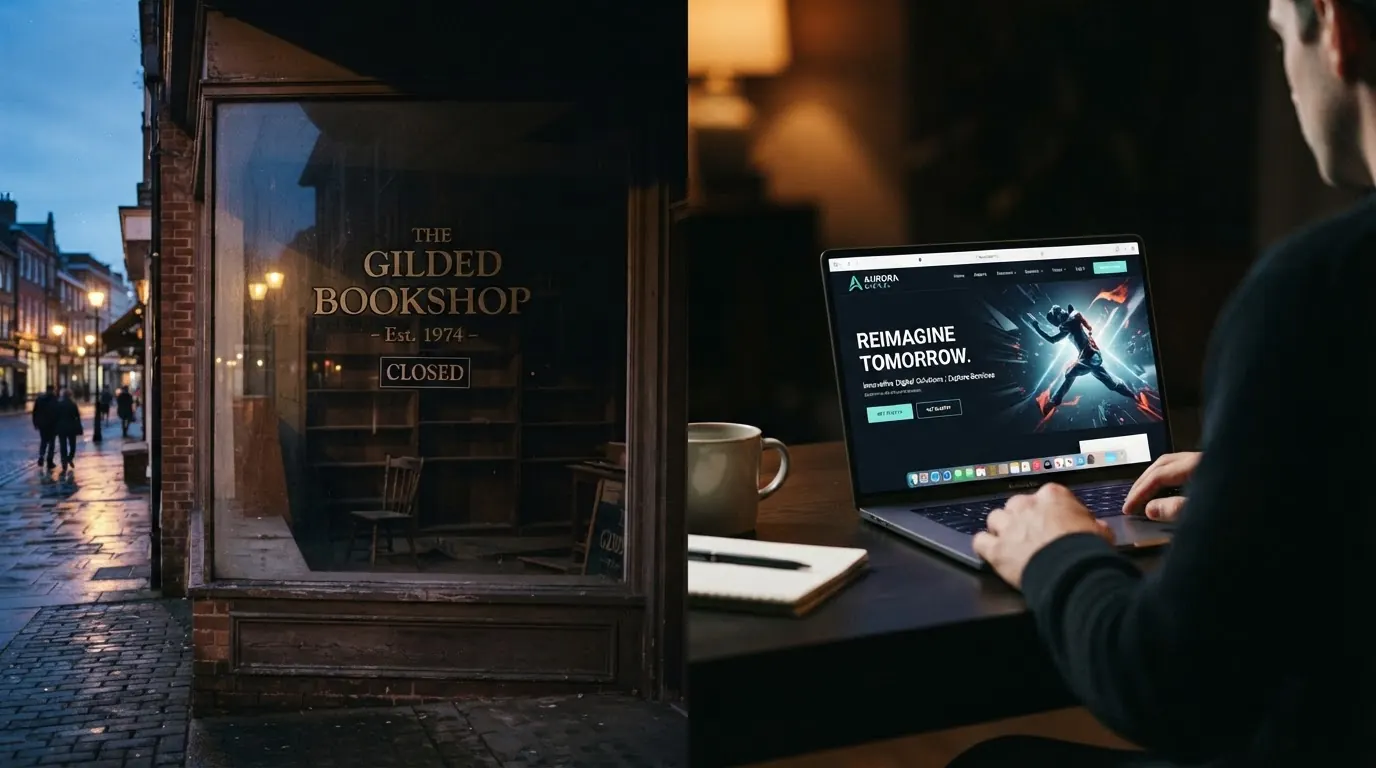
The quick answer: Yes. But not for the reason most web designers will give you. The real reason your small business needs a website in 2026 isn't because "everyone is online." It's because your customers are making decisions about your business online — whether you're there or not. The only question is whether you control what they find.
"But I Get All My Customers Through Word-of-Mouth"
This is the most common reason small business owners give for not having a website — and it makes complete sense. If referrals are working, why fix what isn't broken? Here's why it still matters: When someone gets a referral for your business, what's the very first thing they do? They Google you. They want to confirm you're real, see what you do, read your reviews, and make sure the referral was a good one. If they find nothing — or find an outdated Facebook page with no recent activity — a percentage of those warm referrals quietly walk away and hire someone else. You never know it happened. You just notice that fewer referrals seem to be converting lately.
A website doesn't replace word-of-mouth. It catches the customers that word-of-mouth sends your way — and keeps them from leaking to a competitor who has a better online presence.
What Happens When a Customer Googles Your Business and Finds Nothing
Walk through this scenario: A local contractor does great work. Their customers love them and refer friends regularly. But they have no website — just an old Facebook page they haven't posted on in 8 months. A referred customer Googles the contractor's name. They find the Facebook page, see the last post was from last year, notice there are only 4 reviews (one of which is 2 stars), and can't find any pricing, service area, or way to book. Meanwhile, a competitor's website loads with clear services, 38 Google reviews averaging 4.9 stars, a "Book a Free Estimate" button, and photos of recent work. Which contractor gets the call? The one with the website — every time.
"But I Have a Facebook Page"
Facebook is valuable. But it's not a website — and it can't replace one. Here's the critical difference: A Facebook page lives on Facebook's platform. Facebook controls what your followers see (and organic reach has dropped to under 5% for most business pages). Facebook can suspend or remove your page without warning. Your page doesn't rank on Google for the searches that matter. Your page doesn't collect leads into your own system. A website, built on your own domain, is an asset you own permanently. It ranks on Google. It collects leads directly into your CRM. It works 24/7 without an algorithm deciding who sees it. Facebook and a website work best together — Facebook for community engagement, your website for owned traffic and conversions.
The Businesses That Need a Website Most
Some business types benefit from a website more than others. You especially need one if:
- Customers search for your service online before choosing a provider (trades, health, legal, financial, hospitality)
- You want to appear on Google Maps for local searches
- You offer services to customers outside your immediate social circle
- You want to grow beyond referral capacity
- Your competitors have websites and you don't
- You want to sell anything online
- You want leads coming in when you're not actively working
The Businesses That Can Wait (For Now)
To be honest — there are some situations where a website is lower priority:
- You're at maximum capacity and actively turning away work
- Every single customer comes through one or two long-term business relationships
- You're planning to retire or close within 12 months
Even in these cases, a simple one-page website with your name, services, location, phone number, and Google reviews is worth having — because it protects your reputation and catches the referrals that would otherwise leak away.
What a Website Actually Does for a Small Business in 2026
Six things a website does that no other channel does as well:
Ranks on Google
Appears when customers search for your service in your area.
Works 24/7
Generates enquiries while you sleep, work, or take weekends off.
Builds credibility
Gives customers a professional, trustworthy first impression.
Collects leads
Captures contact information from interested visitors before they leave.
Tells your full story
More space than any social post or directory listing to explain who you are, what you do, and why you're the right choice.
Is an asset you own
Unlike a social media page, your website and domain belong to you permanently.
How Much Does It Cost and Is It Worth It?
A professionally built small business website in Alberta typically costs $1,500–$5,000 depending on scope. For most service-based businesses, a single new customer generated through the website pays for a significant portion of the build cost. A website that generates even one new customer per month is one of the highest-ROI investments a small business can make.