
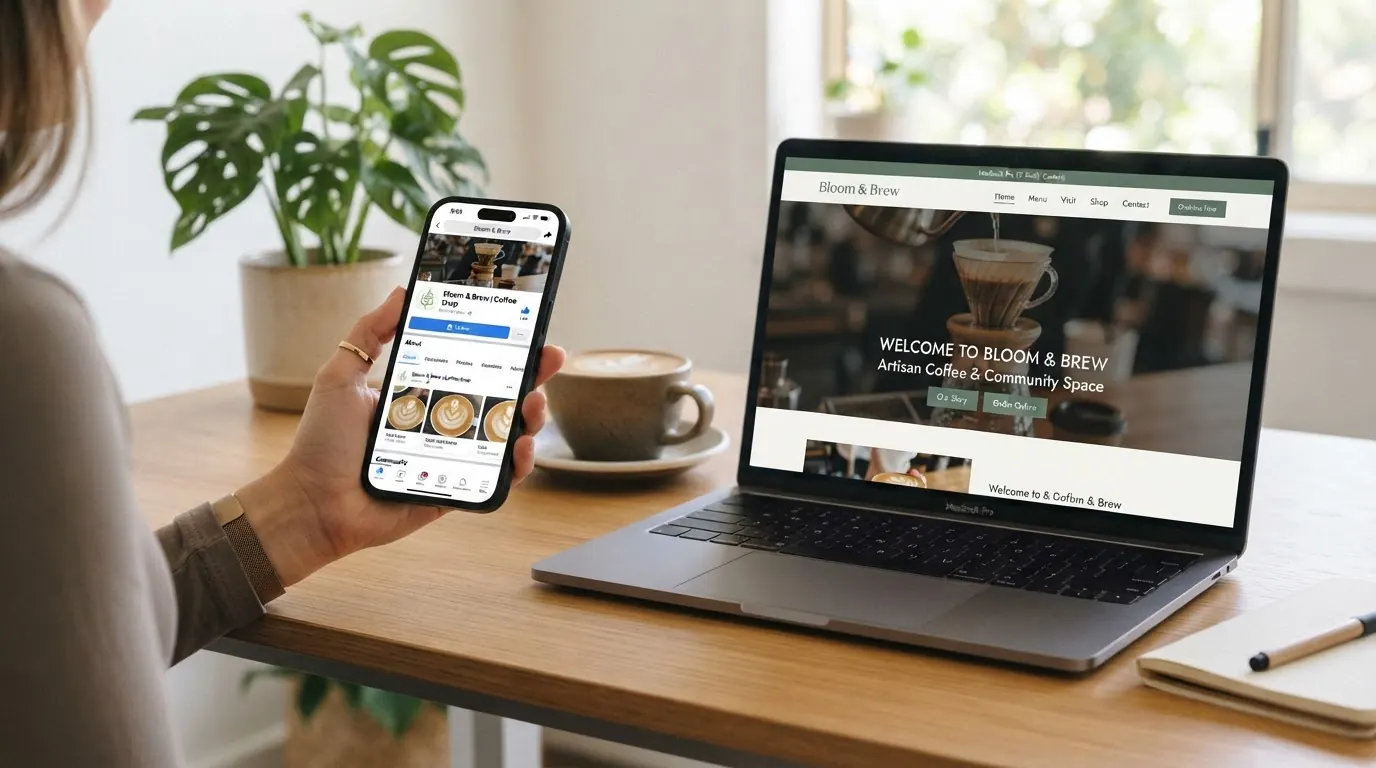
The quick answer: A Facebook page and a website look similar on the surface — both have your business name, photos, and contact info. But they work completely differently, serve different purposes, and have very different implications for your long-term business growth. Using Facebook alone as your online presence is like renting a storefront versus owning one. You can run a business from a rental — but you're always one landlord decision away from losing everything.
The Core Difference — Rented Land vs. Owned Land
Your Facebook page exists on Facebook's platform. Facebook owns it. Facebook controls who sees your posts (organic reach for business pages averages under 5% of your followers). Facebook can change its algorithm, its terms of service, or its business model at any time — and your visibility disappears overnight. Facebook can suspend or permanently remove your page for reasons that aren't always clear or fair, with limited recourse. Your website, on your own domain, is yours permanently. You control every pixel, every word, every feature. No algorithm decides who sees it. No platform can take it away. It ranks on Google independently. It collects leads directly into your system.
In 2024 alone, thousands of small business Facebook pages were suspended without warning due to policy changes and automated moderation errors. Businesses that had no website lost their entire online presence overnight.
What a Facebook Page Does Well
To be fair — Facebook is genuinely useful for certain things: Community engagement and local awareness | Posting updates, events, and offers to existing followers | Running targeted paid ads to specific demographics | Collecting and displaying recommendations | Connecting with customers who prefer Facebook Messenger. Facebook is great for staying top-of-mind with people who already know you. It's a conversation platform.
What a Website Does That Facebook Can't
Ranks on Google Search
When someone searches "electrician La Crete" or "bakery Peace River" — Google shows websites, not Facebook pages (with very rare exceptions). If you want to be found by customers who are actively searching for your service right now, you need a website that's optimized for local search.
Gives You Full Control Over Your Message
On Facebook, your posts compete with friends' photos, news articles, ads, and viral videos for attention. On your website, every visitor is there specifically to learn about your business. No distractions. No competition. Just your message, your story, and your offer.
Captures Leads Into a System You Own
A website contact form, booking widget, or lead capture page sends enquiries directly into your CRM. You own that data permanently. Facebook leads stay on Facebook — and if your page gets suspended, you lose access to all of it.
Builds Lasting Credibility
A professional website signals that your business is established, serious, and invested in quality. Many customers — especially for higher-value purchases or service relationships — will not hire a business that has no website, regardless of how good the Facebook page looks.
Works While You're Not Working
Facebook rewards businesses that post consistently. Stop posting for a month and your reach drops dramatically. Your website keeps ranking, keeps collecting leads, and keeps working 24/7 with zero daily input required.
The Side-by-Side Comparison
| Feature | Facebook Page | Website |
|---|---|---|
| You own it fully | No | Yes |
| Ranks on Google | Rarely | Yes |
| Organic reach controlled by you | No | Yes |
| Can be removed without warning | Yes | No |
| Captures leads into your CRM | Limited | Yes |
| Works without daily posting | No | Yes |
| Builds long-term SEO authority | No | Yes |
| Professional credibility signal | Moderate | Strong |
| Cost per lead over time | Increases | Decreases |
The Smartest Approach — Use Both, But Own Your Foundation
Facebook and a website are not competitors — they're partners. The smartest strategy: your website is your owned digital headquarters (ranks on Google, captures leads, tells your full story, builds long-term authority). Your Facebook page drives community engagement and awareness back toward your website. Think of your website as your home base and Facebook as one of several roads that lead people there. Never build your entire online presence on roads you don't own.
Every follower you build on Facebook is on borrowed ground. Every visitor you get from Google to your website is traffic you earned and own permanently.
What This Means for Peace Country Small Businesses
In small communities, Facebook feels natural — everyone's on it, everyone shares local business posts, and word spreads fast. That's real value and you should absolutely use it. But Peace Country customers also Google businesses before they call. They check Google reviews. They want to see a professional website before hiring someone for a significant job. Meeting your customers both where they hang out (Facebook) and where they search (Google) means you never miss a lead regardless of how they find you.